PAPER
https://arxiv.org/abs/1710.10903
Graph Attention Networks
We present graph attention networks (GATs), novel neural network architectures that operate on graph-structured data, leveraging masked self-attentional layers to address the shortcomings of prior methods based on graph convolutions or their approximations
arxiv.org
Foundational Knowledge for GATs
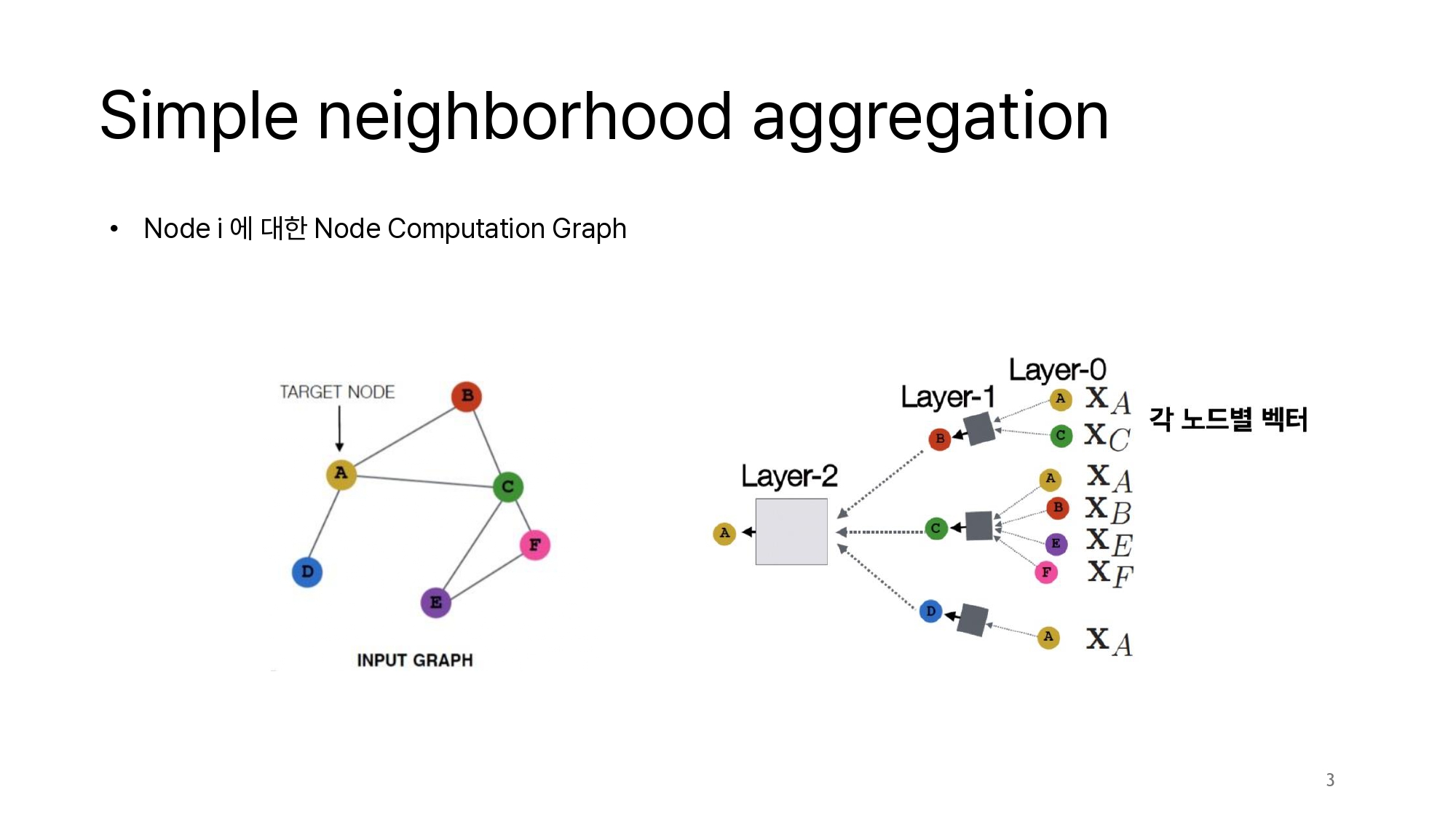
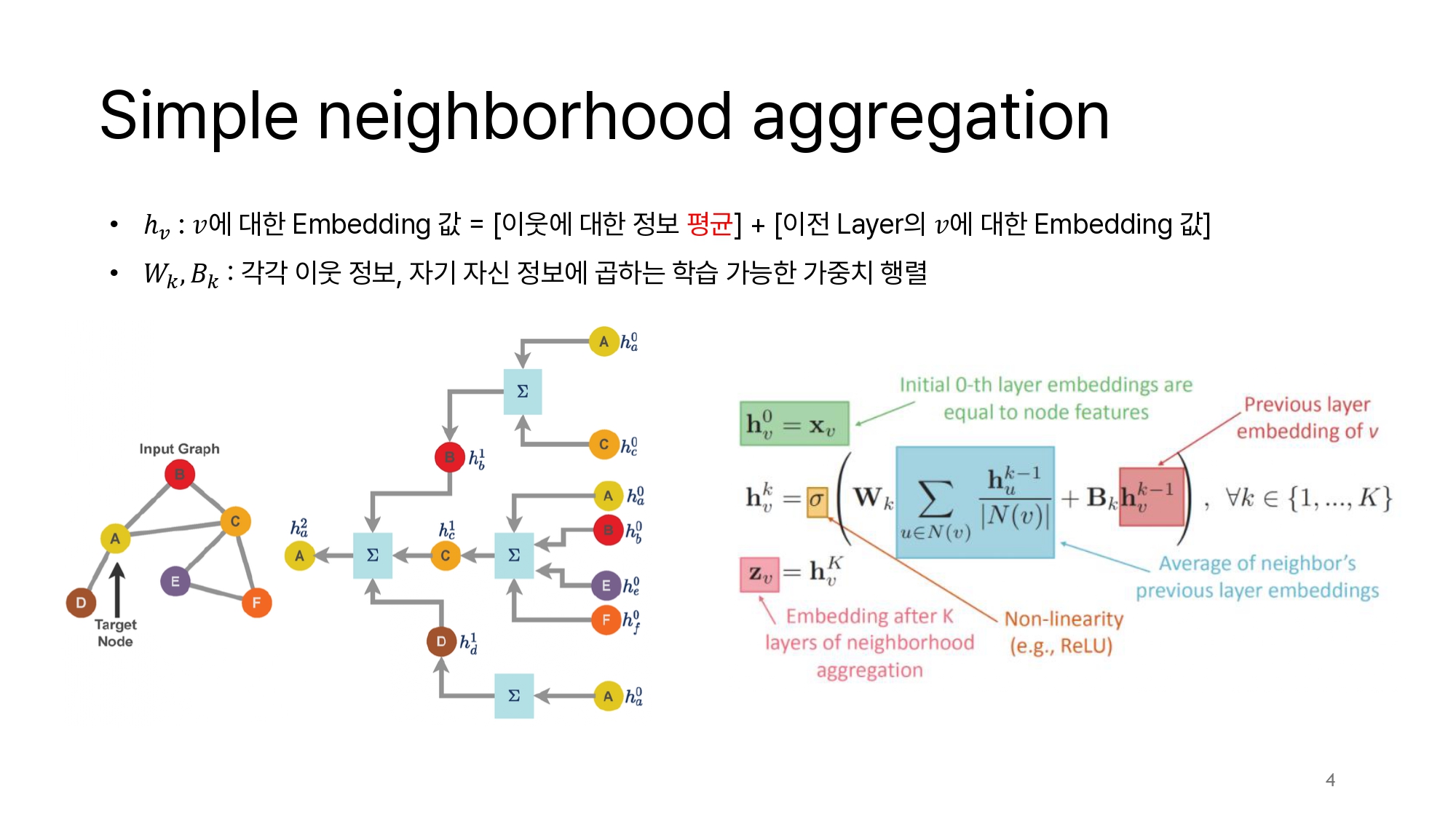
Simple neighborhood aggregation
https://doraemin.tistory.com/246
Simple neighborhood aggregation
Node i 에 대한 Node Computation Graph $h_v^k$ : **노드 vv**의 $k$번째 layer의 임베딩 (출력)$h_u^{k-1}$: 이웃 노드 $u$의 이전 layer의 임베딩 (입력)$N(v)$: 노드 $v$의 이웃 집합$W_k, B_k$: 각각 이웃 정보, 자기 자신
doraemin.tistory.com
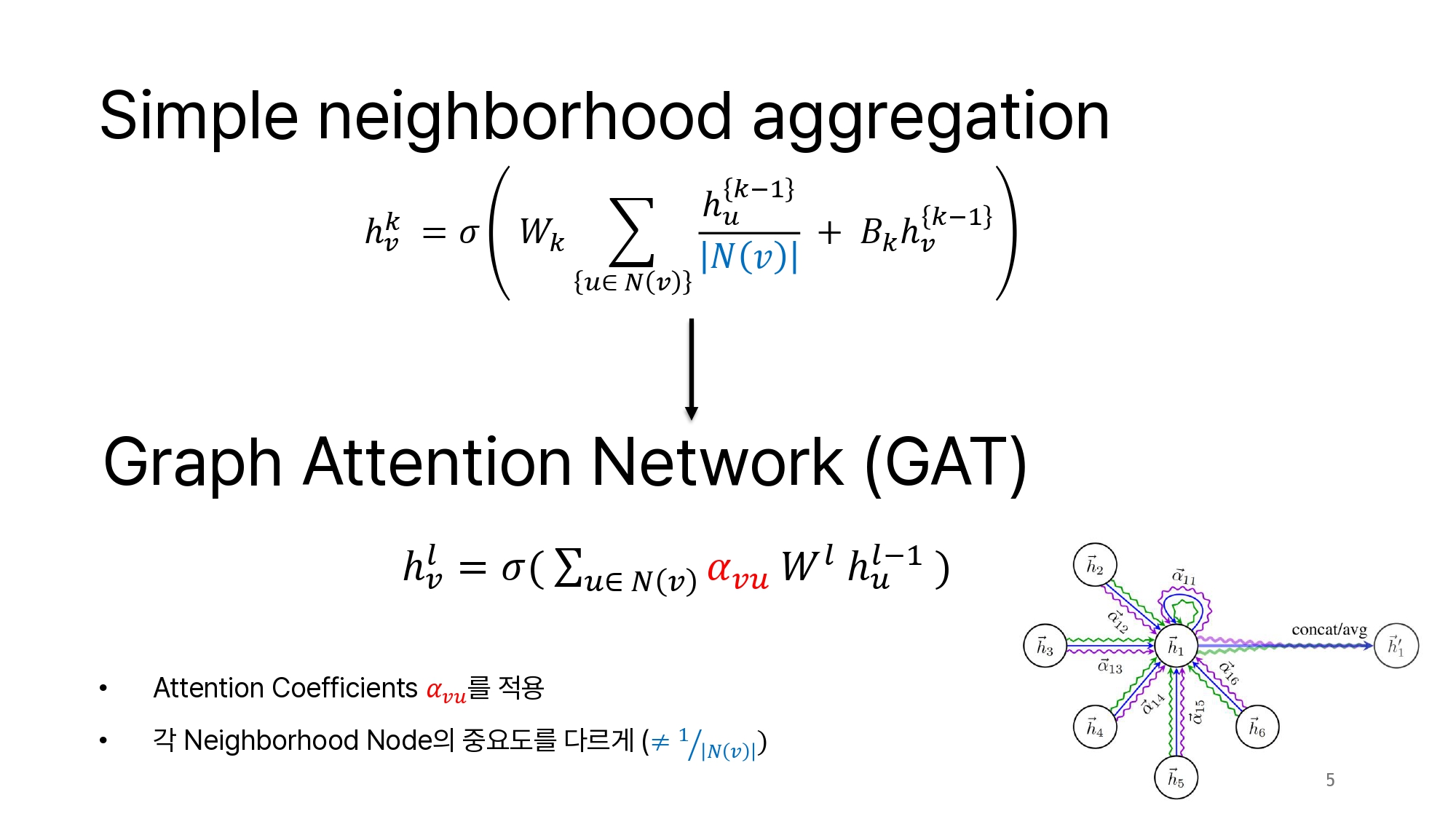
Graph Attention Network (GAT)
https://doraemin.tistory.com/247
Graph Attention Network (GAT)
Simple neighborhood aggregation 개념을 바탕으로attention을 적용한, Graph Attention Network (GAT) 의 구조를 살펴보자. Simple neighborhood aggregation Simple neighborhood aggregationNode i 에 대한 Node Computation Graph $h_v^k$ : **노
doraemin.tistory.com
[GAT] self-attention
https://doraemin.tistory.com/251
[GAT] self-attention
GAT에서 self-attention이 사용되긴 하지만, Transformer-style의 Key/Query/Value (KQV) 구조와는 다르게 간단화된 형태입니다.하지만 그럼에도 불구하고 우리가 익숙한 K/Q/V 해석 관점에서 대응 관계를 살펴볼
doraemin.tistory.com
PAPER REVIEW SLIDE